
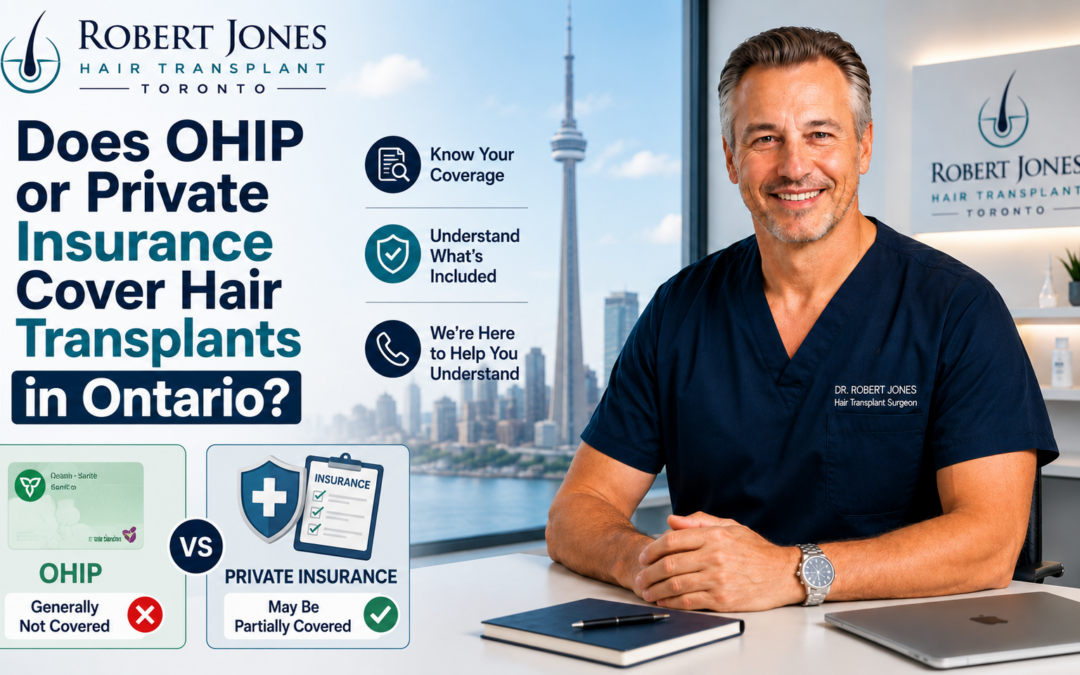
Hair transplant surgery can be a significant financial decision, so it is natural to ask whether OHIP or private health insurance will help cover the cost. In Ontario, the answer generally depends on why the procedure is being performed and the terms of your insurance policy.
For most people considering a hair transplant to address pattern hair loss, the procedure is considered elective or cosmetic. This means OHIP generally does not cover it. Private insurance plans also commonly exclude cosmetic procedures, although coverage depends on the specific policy and medical circumstances.
Here is what Ontario patients should understand before planning a hair transplant.
Does OHIP cover hair transplants in Ontario?
In most cases, no. OHIP does not cover cosmetic surgery, and hair transplant procedures performed to address common hereditary or pattern hair loss are generally not insured.
OHIP coverage is intended for medically necessary healthcare services. A procedure performed primarily to improve the appearance of the hairline, restore hair density or address male or female pattern baldness generally falls outside that coverage.
However, Ontario’s coverage rules do recognize certain specific circumstances involving hair loss. These may include:
- Hair loss following trauma: Surgical repair of traumatic hair loss may qualify for coverage when it is performed within a reasonable period after the injury. Ministry approval is required.
- Certain cases involving children: Repair of non-hereditary hair loss may be insured for patients aged 17 and under, subject to the applicable requirements.
- Other causes of hair loss: Hair restoration for other causes is generally not insured under the OHIP schedule.
These exceptions are limited. A medical assessment and the applicable Ministry requirements determine whether a particular procedure qualifies. Having a medical reason for hair loss does not automatically mean that a hair transplant will be covered.
Does private health insurance cover hair transplant surgery?
Private health insurance coverage varies between providers and individual plans. Many policies exclude procedures considered cosmetic or elective, which means they may not cover hair transplantation for hereditary hair loss.
However, it is better to check your own policy rather than assume that every plan has the same exclusions.
Before booking a procedure, contact your insurance provider and ask:
- Does my policy cover hair transplant surgery?
- Are procedures for hereditary or pattern hair loss excluded?
- Is coverage available when hair loss results from an accident, injury or medical condition?
- Does the plan require a referral or medical documentation?
- Is written pre-approval required before treatment?
- Are any related medical expenses eligible for reimbursement?
Ask the insurer to provide its response in writing. Verbal confirmation may not be enough when you submit a claim later.
What if hair loss is caused by an accident or medical condition?
The reason for hair loss can affect how an insurance provider or the Ontario Ministry of Health reviews a coverage request.
For example, someone who has lost hair because of a traumatic injury may be assessed differently from someone experiencing gradual hereditary hair loss.
Even in these circumstances, coverage is not automatic. The procedure must meet the applicable eligibility requirements, and prior approval may be necessary.
If your hair loss is related to an injury or medical condition, keep relevant medical records and ask your healthcare provider and insurer what documentation is required.
What costs should you consider before a hair transplant?
If OHIP or private insurance does not cover your procedure, you will generally need to plan for the cost yourself.
The total expense can vary depending on the treatment recommended and the details of your case. Factors may include:
- Transplant technique: FUE and FUT involve different approaches to harvesting donor hair.
- Number of grafts: The size of the area being treated and the amount of donor hair available can affect the procedure plan.
- Treatment goals: Restoring the hairline, addressing crown thinning or treating a larger area may involve different surgical considerations.
- Follow-up care: Ask what appointments and post-procedure support are included in the quoted fee.
Request a clear breakdown of the proposed treatment and associated costs before making a decision. A consultation can help establish which options may be appropriate for your hair-loss pattern and goals.
Are non-surgical hair loss treatments covered by insurance?
Non-surgical treatments may also involve out-of-pocket expenses. Coverage depends on the treatment, how it is prescribed and the terms of your insurance plan.
For example, Minoxidil and Finasteride may be considered for certain types of pattern hair loss. Prescription drug coverage for Finasteride, if applicable, depends on your plan’s drug benefits and eligibility rules. Non-prescription products may be treated differently.
Other approaches, such as platelet-rich plasma (PRP), may be subject to separate exclusions or limitations.
Do not assume that coverage for prescription medication means your insurance will also cover hair restoration procedures or other treatments. Check each expense separately with your insurer.
How to confirm your insurance coverage before treatment
Taking a few steps before scheduling surgery can help you avoid unexpected expenses.
- Review your policy: Look for exclusions related to cosmetic surgery, elective procedures and hair restoration.
- Speak with your insurer: Explain the reason for your hair loss and the procedure being considered.
- Ask about pre-approval: Find out whether the insurer requires a written estimate, medical records or a referral.
- Request written confirmation: Keep a copy of the insurer’s response and any approval documents.
- Discuss the treatment plan: Ask the clinic for details about the proposed procedure and costs so you can share accurate information with your insurer.
If you are seeking OHIP coverage because of traumatic or non-hereditary hair loss, ask whether the procedure meets the Ministry’s requirements before proceeding.
Discuss your hair restoration options with Dr. Robert Jones
If you live in Ontario and are considering a hair transplant, understanding the financial side of treatment is an important part of planning.
Dr. Robert Jones provides hair restoration consultations at his Oakville practice for patients from Toronto, Burlington and surrounding communities. During a consultation, your hair-loss pattern, donor area, existing hair and treatment goals can be reviewed to discuss appropriate options.
The practice offers surgical and non-surgical hair restoration approaches. The recommended treatment depends on individual circumstances, and no particular procedure is suitable for everyone.
Practice location:
1495 Cornwall Rd., Suite 31
Oakville, Ontario L6J 0B2
Phone: (905) 236-1048
If you are considering hair restoration, contact the practice to discuss your concerns and learn about the next steps.
Frequently asked questions
Does OHIP pay for FUE hair transplants in Ontario?
OHIP generally does not cover FUE hair transplants performed for hereditary or pattern hair loss. Limited exceptions may apply to specific cases of traumatic or non-hereditary hair loss, subject to Ontario’s coverage requirements.
Does OHIP cover hair transplants for male pattern baldness?
No. Hair transplant surgery for male pattern baldness is generally considered an uninsured service under OHIP.
Can private insurance cover hair transplant surgery?
Some policies may consider coverage in specific medical circumstances, but many exclude cosmetic procedures. Contact your insurer and request written confirmation before scheduling treatment.
Can I claim a hair transplant through my employer’s health benefits?
Employer-sponsored health benefits follow the terms of the insurance policy. Check the plan’s exclusions and ask the insurer whether hair transplant surgery is eligible for reimbursement.
Are hair transplant consultations covered by OHIP?
Do not assume that a consultation is automatically covered. OHIP coverage depends on the type of service, the provider and whether the service meets the applicable requirements. Ask the clinic and your healthcare provider about any consultation fees before booking.
Should I get insurance approval before booking a hair transplant?
Yes. If you believe your policy may cover the procedure, request written confirmation and any required pre-approval before committing to treatment.