
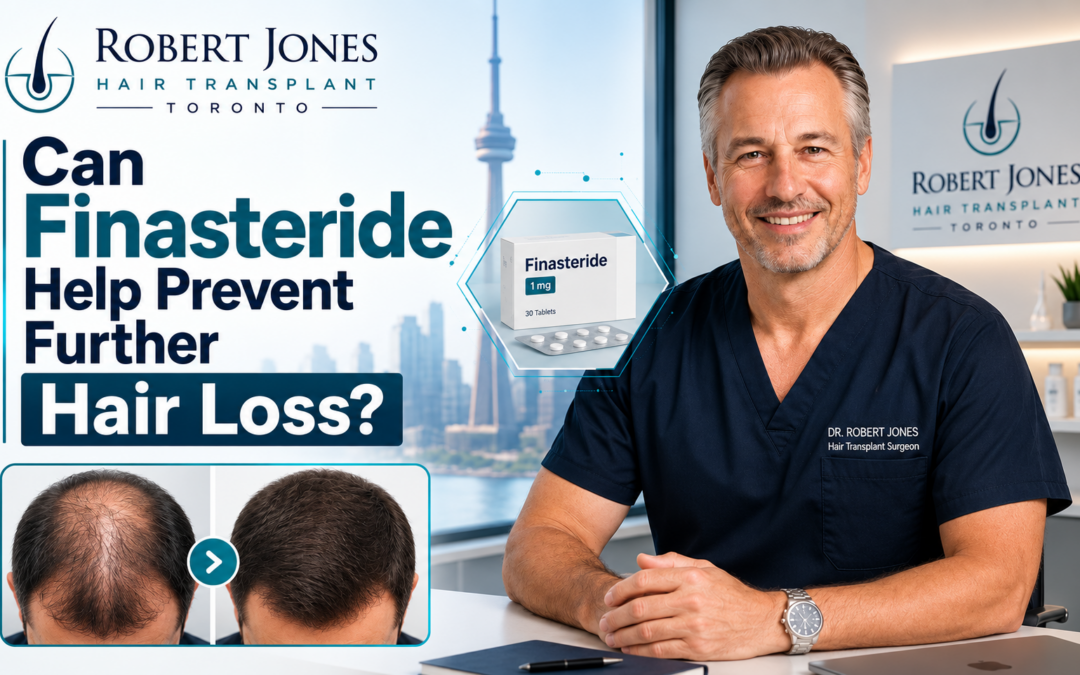
Hair loss affects a huge number of Canadians — by some estimates, roughly half of men will experience some degree of male pattern baldness by age 50. For many, the question isn’t just “can I regrow hair?” but something more urgent: “can I stop losing the hair I still have?” Finasteride is one of the few medications with a solid track record for doing exactly that. Here’s what Canadians should know before considering it.
What Is Finasteride?
Finasteride is a prescription medication that has been authorized for sale in Canada for the treatment and control of prostate gland enlargement (benign prostatic hyperplasia), and for the treatment of male pattern hair loss (androgenetic alopecia). It’s been marketed in Canada since 1992 under the brand name Proscar (5 mg tablets), and since 1998 under the brand name Propecia (1 mg tablets), with generic versions now widely available.
Interestingly, finasteride wasn’t originally developed for hair loss at all. It was created to treat enlarged prostates, and doctors noticed a side benefit: older men taking it for prostate issues were regrowing hair. That observation led to the lower-dose, 1 mg formulation now used specifically for androgenetic alopecia.
How Does It Actually Work?
Male pattern hair loss is driven largely by a hormone called dihydrotestosterone (DHT), a byproduct of testosterone. DHT gradually shrinks hair follicles on the scalp — a process called miniaturization — until they stop producing visible hair altogether.
Finasteride works by blocking the enzyme (5-alpha-reductase) that converts testosterone into DHT. Lowering DHT levels in the scalp reduces the pressure on hair follicles, which is why finasteride is better understood as a preventive treatment rather than a guaranteed regrowth solution. It’s most effective at slowing or halting further shedding; any regrowth that occurs is generally considered a bonus.
Does It Actually Prevent Further Hair Loss?
Yes — for most men, this is where finasteride shows its clearest benefit. Clinical evidence consistently shows it can stop or significantly slow the progression of male pattern baldness in a majority of users, with a smaller portion also seeing measurable regrowth. A few important caveats:
- It takes time. Most men need three to six months of daily use before noticing a difference, and up to a year to see the full effect.
- It’s a maintenance treatment, not a cure. DHT rebounds if you stop taking it, and hair loss typically resumes its previous course within months of discontinuation.
- Earlier is better. Finasteride works on hair follicles that are miniaturized but not yet dead. It generally can’t bring back hair from scalp that’s been bald for years.
Is It Available in Canada, and Do You Need a Prescription?
Yes on both counts. Finasteride tablets (Proscar and Propecia, plus generics) are Health Canada–approved, but the medication is prescription-only in Canada. You can’t buy it over the counter at a pharmacy. To get a prescription, you can:
- See your family doctor or a dermatologist in person
- Use a telemedicine/virtual care platform, many of which now offer online consultations specifically for hair loss
Finasteride is rarely covered by insurance policies within Canada, though coverage can vary from policy to policy and province to province, so it’s worth checking your plan before assuming it will be reimbursed.
A Note on Topical Finasteride
You may come across “topical finasteride” marketed by some Canadian telehealth clinics as a lower-side-effect alternative to the pill. It’s worth knowing that in Canada, all finasteride formulations are prescription-only under Health Canada regulations, but topical finasteride specifically has not been approved by Health Canada — a Health Canada spokesperson has confirmed it was never authorized as a standalone product. Where available, it’s typically dispensed as a compounded product through a licensed prescriber and pharmacy, not as an approved drug in its own right. If you’re considering it, ask your prescriber directly about its approval status and the evidence behind it.
Side Effects Canadians Should Know About
Finasteride is generally well tolerated, and side effects are uncommon, but they’re worth understanding before you start:
- Sexual side effects, including reduced libido or erectile difficulties, occur in a small minority of users — commonly cited rates are in the low single digits — and often resolve after stopping the medication.
- Mood-related effects, including depression and suicidal ideation, have received regulatory attention in recent years. Health Canada completed a review in 2022 of the risk of suicidal ideation and self-injury associated with finasteride use, prompted by public reporting on the issue. If you have a history of depression or notice mood changes after starting the medication, talk to your doctor promptly.
- Most side effects, when they occur, are mild and reversible upon stopping treatment.
Because of these risks, it’s important that finasteride be taken under the guidance of a physician who can monitor you and answer questions specific to your health history — not purchased informally or used without medical oversight.
Is Finasteride Right for You?
Finasteride tends to be most useful for men who:
- Are in the earlier stages of male pattern hair loss (thinning rather than complete baldness)
- Want to preserve their current hair rather than primarily seeking regrowth
- Are comfortable with a long-term, daily commitment (benefits reverse if you stop)
- Have discussed their full medical history — including mental health — with a prescriber
It’s typically not prescribed for women, particularly those who are pregnant or may become pregnant, due to risks to a developing male fetus. Women experiencing hair loss should speak with a doctor about alternative options.
Many Canadian clinicians consider finasteride, often paired with topical minoxidil, a first-line and well-established option for androgenetic alopecia — largely because of its regulatory track record and decades of safety data compared to newer alternatives.
The Bottom Line
Finasteride won’t necessarily give you back a full head of hair, but for many Canadians dealing with early to moderate male pattern hair loss, it’s one of the more effective tools available for slowing or stopping further loss. Getting there requires a proper prescription, realistic expectations about timeline and results, and an honest conversation with a healthcare provider about your personal risk factors.
This article is for general informational purposes and isn’t a substitute for personalized medical advice. If you’re considering finasteride, speak with a doctor, dermatologist, or licensed prescriber who can assess your specific situation.